
2025 Impact Report
Magnes Collection of Jewish Art and Life at UC Berkeley
Founded in 1962 by Seymour and Rebecca Camhi Fromer, the Magnes became one of the first museums in the United States focused on preserving the legacy of Jewish communities around the world.
Now part of the University of California, Berkeley within the Division of Arts and Humanities, the Magnes stands out as one of the world’s preeminent Jewish museums. We use the extraordinary collections in our care to connect people of all backgrounds with the history, vibrancy, and diversity of Jewish life around the world.
Message from the Executive Director
Thank you on behalf of the entire Magnes team for your generosity in supporting our work and bringing thoughtful discourse as well as joyful energy to the museum throughout the year. When more than 100 people filled the auditorium with song and dance during the Henna Party in March, I watched community members connect enthusiastically across generations and embrace Jewish traditions. You made that moment possible.
This report reflects the many ways you have helped the Magnes fulfill its mission to generate new knowledge and understanding of Jewish cultures this year—from the crucial conversations sparked by our timely exhibition, In Plain Sight: Jewish Arts and Lives in the Muslim World, to the vibrant day of learning at our inaugural Jewish Arts & Bookfest.
The year ahead looks bright. With your continued partnership, we will build community and help learners of all ages strengthen their connections to Jewish culture through our current exhibition, Flowing through Time and Tradition, and our robust schedule of exhibition and collections-related programs.
Please join me in celebrating the achievements that you have made possible. Thank you for making the Magnes a place where knowledge and understanding flourish.
With gratitude,
Hannah E. Weisman
Executive Director
Community
Envisioning a society that seeks common ground while honoring cultural differences and embraces the diversity of Jewish life around the world.
Connections & Discovery
Our commitment to community engagement ensures the Magnes is a vibrant hub for connection. This year, our exhibitions, public programs, and partnerships fostered profound experiences that brought diverse audiences together, creating a lively and essential space for collective discovery. These gatherings encouraged understanding across differences and highlighted the enduring complexity and richness of Jewish life, both historically and in the Bay Area today.

Museum Visitors
Days Open
Group Tours
Public Programs
Celebrating Jewish American Heritage Month
In May, approximately 300 people packed the Magnes during our inaugural Jewish Arts & Bookfest. The joyful, daylong event headlined by Daniel Handler, aka Lemony Snicket, brought together people from across the Bay Area—from university faculty, staff, and students to visitors from San Francisco and the Peninsula—and strengthened our relationships with peer organizations in the region. Save the date! The Jewish Arts & Bookfest returns on May 3, 2026.

 “I’m glad all of you… came here to the Jewish festival so that we may speak of books, as our people have done for generations.”
— Danial Handler (A.K.A. Lemony Snicket), Bestselling author and 2025 Jewish Arts & Bookfest Keynote Speaker
Photo by Meredith Heuer

Celebrating Jewish Diversity in the Bay Area
Reflecting the multiethnic landscape of Bay Area Jewish life, the Magnes hosted programs on Sephardi and Mizrachi traditions. The celebratory Henna Party, co-produced with JIMENA (Jews Indigenous to the Middle East and North Africa), transformed the museum into a vibrant wedding party, featuring traditional music, garments, and ritual. Texts You Can Taste used the universal language of food to explore Sephardic culture and connect history with contemporary life.

Exploring Jewish Life in the Muslim World
Programming related to the exhibition In Plain Sight: Jewish Arts and Lives in the Muslim World explored the intersections of Jewish and Islamic traditions seen in art and objects spanning centuries, regions, and languages. The blend of scholarly rigor and intimate personal narrative in programs ranging from a curatorial workshop and international symposium to conversations between authors and scholars underscored the depth and complexity of these historical relationships.

Jewish Literary and Performing Arts
As a dynamic stage for global artistic expression, the Magnes shared the vibrancy of Jewish arts. From Victoria Hanna’s Sounds Create Worlds exploring the mystical power of sound and language and the inspiring vocals of renowned Persian/Kurdish-American musican Elana Sasson to two translators discussing divergent voices in contemporary Hebrew poetry, these programs centered Jewish creative expression as a means of understanding history, culture, and identity.
“Sharing a meal with other attendees yielded new connections. I appreciated hearing the Rabbi’s lively stories of henna parties in Morocco.”
— Magnes Program Attendee
Engaging the Next Generations
Creating and facilitating collections-based opportunities to help our youngest visitors find authentic connection with Jewish art and life is an important part of what we do as a cultural institution. Engaging with the children and youth who walk through our doors, feeling their excitement, answering the questions they ask, and witnessing the discoveries they make, we see first-hand just how bright the future is!
Youth Leadership
The Teens Take the Magnes program is cultivating the next generation of Jewish cultural stewards. Our dedicated volunteer committee of high school students spent six months learning about the museum and its collections while planning an event for their peers. Their successful takeover on March 2 transformed the Magnes into a welcoming social hub and educational space by and for young adults.

 “I didn’t know much about the Magnes before [Teens Take the Magnes]… and I’m so glad I do now! The Magnes is a collection of culturally and historically important knowledge, artifacts, and art, most of which is incredibly powerful and interesting. After only a few visits to the Magnes, I learned a lot about Judaism and different aspects of Jewish history!”
— Zola, Magnes Teen Volunteer

Our Youngest Visitors
The PJ Library Story Hour provides an engaging opportunity for young children and their families to enjoy the museum, establishing it as a friendly, multi-generational place of learning and Jewish culture. The successful partnership with PJ Library Bay Area brought more than 30 young families into the Magnes.
Campus and Community Partnerships
This year, the Magnes collaborated with 29 community organizations and 21 campus partners, ranging from local cultural centers and affinity groups to diverse academic departments across UC Berkeley. These partnerships powerfully extend our impact, enabling us to co-create programs, share resources, support our collaborators, and present a rich, multifaceted understanding of Jewish art and life. They ensure the Magnes remains a dynamic center for connection, learning, and cultural exchange.

 “The vastness of the collection is incredible in its ability to present a rich image of Jewish history, much of it pieced together from separate family collections. I discovered that my late grandmother worked as a board member at the Magnes, emphasizing to me the museum’s impact on the surrounding community across decades.”
— Alex, Magnes Teen Volunteer
Staying Connected
Through regular newsletters, emails, dynamic social media content, and our comprehensive website, we keep our audiences informed, inspired, and connected to the Magnes. We share news about the museum, highlight and offer access to unique objects in the collection, and provide information about exhibitions and programs. By nurturing our online presence, we ensure that our stories, research, and educational opportunities reach a broad and diverse audience, reinforcing our role as a vital cultural resource.
Social Media Impressions
Emails Sent
YouTube Views
Website Users
Teaching & Learning
Creating and facilitating collections-based opportunities for research, teaching, learning, and creative expression.
Jewish Learning
The Magnes is a dynamic partner in Jewish education across the Bay Area. Secondary and supplemental school students visiting the Magnes participate in active, object-based learning. An inquiry-driven approach connects primary sources, including art and objects, to the students’ own studies and personal identities, asking them to consider questions such as, “What makes an object Jewish,” and “What are the relationships between Jewish communities and their neighbors?”

“My high school students, who were studying the Jewish Diaspora, had a wonderful, identity-enhancing time exploring In Plain Sight! … We’re still talking about elements of this visit in class; the Hamsa-shaped Mezuzah cover, Sephardic Torah scroll, and book-shaped Ketubah from Mashad were all recently brought up for one reason or another. In this way, we’re still reaping the rewards of our visit to the Magnes. It’s a gift that keeps on giving!”
— Raizy Lichtenstein, Jewish Community High School of the Bay Jewish Studies Educator
An Extension of the University Classroom
As a university museum, we engage students as learners, visitors, and colleagues. Their impact on and contributions to the Magnes match the impact the museum has on them and their university experience.
Class Visits
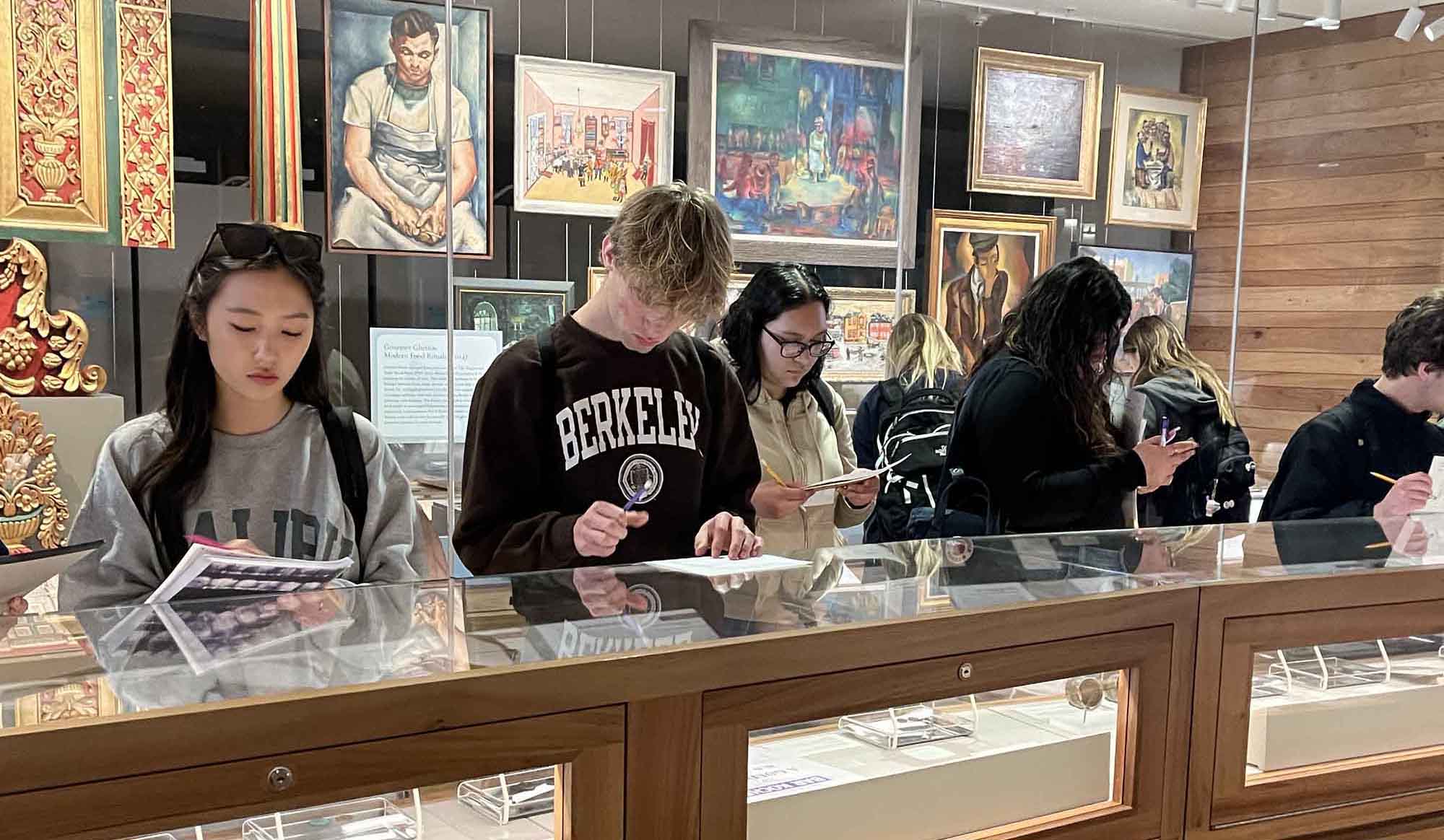
Collections-based instruction is central to our mission as a campus museum and research center. Faculty from diverse fields—including architecture, history, and Jewish studies—brought students to the museum and integrated Magnes holdings into their syllabi. This commitment to object-based learning ensures that students don’t just read about history and culture; they touch, analyze, and interrogate the primary sources by which we understand it.
Undergraduate Research at the Magnes
Under the mentorship of our curators and collections team, Undergraduate Research Apprentices contributed directly to the accessibility of our holdings while building crucial professional skills. From digitizing and developing image descriptions for Roman Vishniac’s Chinatown photographs to analyzing archival documents for the award-winning research paper Caste Dismemberment through Aliyah: How Cochin Jews Used Zionism as a Tool for Social Justice by Aryan Sawant, students gained direct, hands-on research experience with Jewish material culture.


The URAP Postcard Project
Under the mentorship of Senior Curator Francesco Spagnolo, seven UC Berkeley Undergraduate Research Apprentice Program (URAP) students inventoried, processed, and researched thousands of items in our vast postcard collection. This initiative culminated in the May program, Out of the Mailbox, where students publicly presented their research, highlighting the powerful intersection of academic mentorship and active collections stewardship.
Work-Study Staff
Our talented cohort of student colleagues in the Work-Study program are indispensable to the Magnes. From the focused work of our Collections Assistant, who made vital progress in processing slides in the Roman Vishniac Archive, to the front-facing roles of our Visitor Services team, our student staff is deeply embedded in our operations. This impactful partnership allows undergraduates to gain experience in a real-world museum setting, developing transferable skills as they facilitate public access and and help steward the collection.

Collections
Managing our collections to ensure the museumʼs ongoing cultural relevance and sustainability.
Public Access
Opening In Plain Sight
The year opened with a timely new exhibition, In Plain Sight: Jewish Arts and Lives in the Muslim World, which Drs. Francesco Spagnolo and Qamar Adamjee curated to reflect cultural affinities and common threads. Rich academic, cultural, and social programming in conjunction with the exhibition enabled community members to participate in crucial conversations about coexistence and mutual understanding that In Plain Sight invited.

 “In Plain Sight… opens a needed conversation about diaspora, hospitality, and coexistence. It reflects the best of the Magnes, a combination of scholarly collaboration, curatorial innovation, and object-driven inquiry in order to reveal a narrative that too often has been overlooked. This exhibit shows how turning thoughtfully to the past can help us to imagine ways of living together in the future.”
— Sara Guyer, Irving and Jean Stone Dean of the Division of Arts & Humanities at UC Berkeley
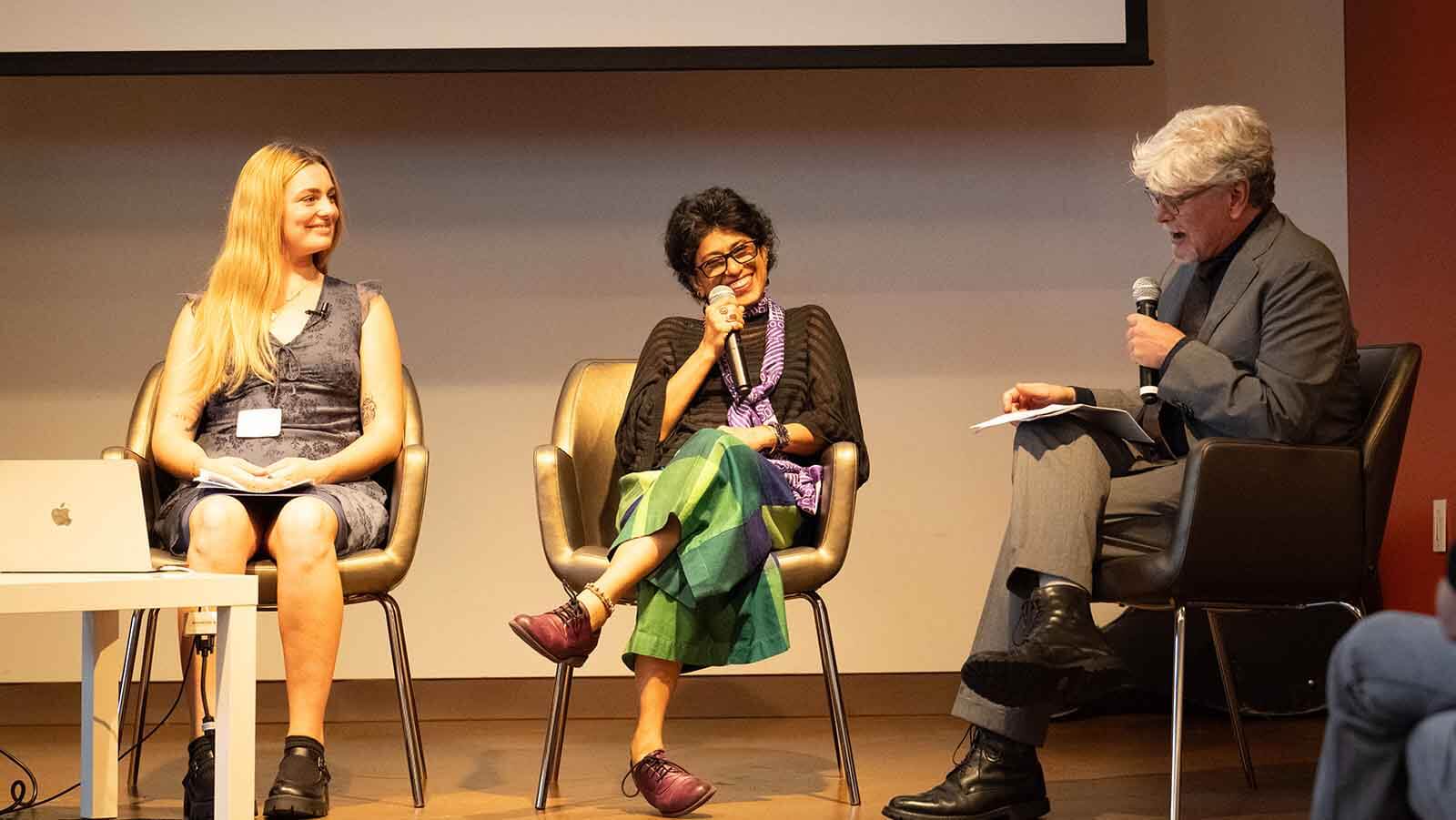
The opening event brought Exhibition Co-curators Spagnolo and Adamjee to the stage with Undergraduate Curatorial Assistant (URAP) Paris Grae Bailey (Art History ’24). Introducing In Plain Sight, they discussed their research on the objects and artworks on view and the themes that emerged: rootedness in diaspora, shared visual vocabularies, attitudes toward sacred texts and human bodies, networks of trade and knowledge exchange, and the central role of light in prayer spaces.

Research and Development for Flowing through Time and Tradition
While developing Flowing through Time and Tradition and its related programming, the Magnes collaborated with dozens of community members in shaping the exhibition. Associate Curator Achinoam Aldouby and the collections team held interactive focus groups with scholars and community members and set up a feedback station where museum visitors could vote and share their thoughts on objects being considered for display.
Rights & Reproductions
By facilitating licensing requests for publications, media, and academic research, collections staff at the Magnes ensured that the museum’s holdings reached audiences far beyond Berkeley. This year saw continued progress in managing access to the Roman Vishniac Archive, balancing demand for his photography with the ongoing work of comprehensive processing and stewardship.
Image Requests
Behind the Scenes

Digital Infrastructure
To ensure the long-term preservation and accessibility of our collections records, the Magnes launched an initiative to modernize our digital infrastructure. We audited more than 55,000 images and 16,000 catalog records to eliminate duplicates, standardize taxonomy, and enrich metadata. We expanded public access by curating new albums on Flickr while developing templates to streamline future digitization. These efforts paved the way for the adoption of Terentia, an integrated Collection and Digital Asset Management System to replace our legacy collections catalog software in the next year.
An Improved Exhibition Workshop
Thanks to a generous grant from the Frederick J. Isaac Philanthropic Fund, the Magnes updated our exhibition fabrication workshop with much needed new tools and supplies. Presenting exhibitions is one of the most direct ways the Magnes fosters knowledge and appreciation of Jewish life. From saws, cutters, and routers to matboard and framing stock, the support for behind-the-scenes infrastructure allows us to create compelling and professional exhibitions and gallery materials more efficiently and cost effectively.


Pierre Alechinsky by Nancy Lee Katz, New York City, 2000. Gift of Michael S. Sachs. 2024.1.3.
New Acquisition: Nancy Lee Katz’s Pantheon
Over the course of twenty-five years, artist Nancy Lee Katz (1947-2018) photographed her Pantheon, an inspiring collection of portraits of individuals whom she admired. The sitters were leading figures in their fields, including artist Helen Frankenthaler, composer Phillip Glass, architect Peter Eisenman, and Justice Ruth Bader Ginsburg, each posed in a space or with an object that speaks to their work. With no two photographs the same, Katz sensitively photographed each sitter, allowing their personalities and individuality to come through. Nancy Lee Katz’s longtime partner Michael S. Sachs generously donated a full set of 133 gelatin silver prints to the Magnes.
Staff Retirements
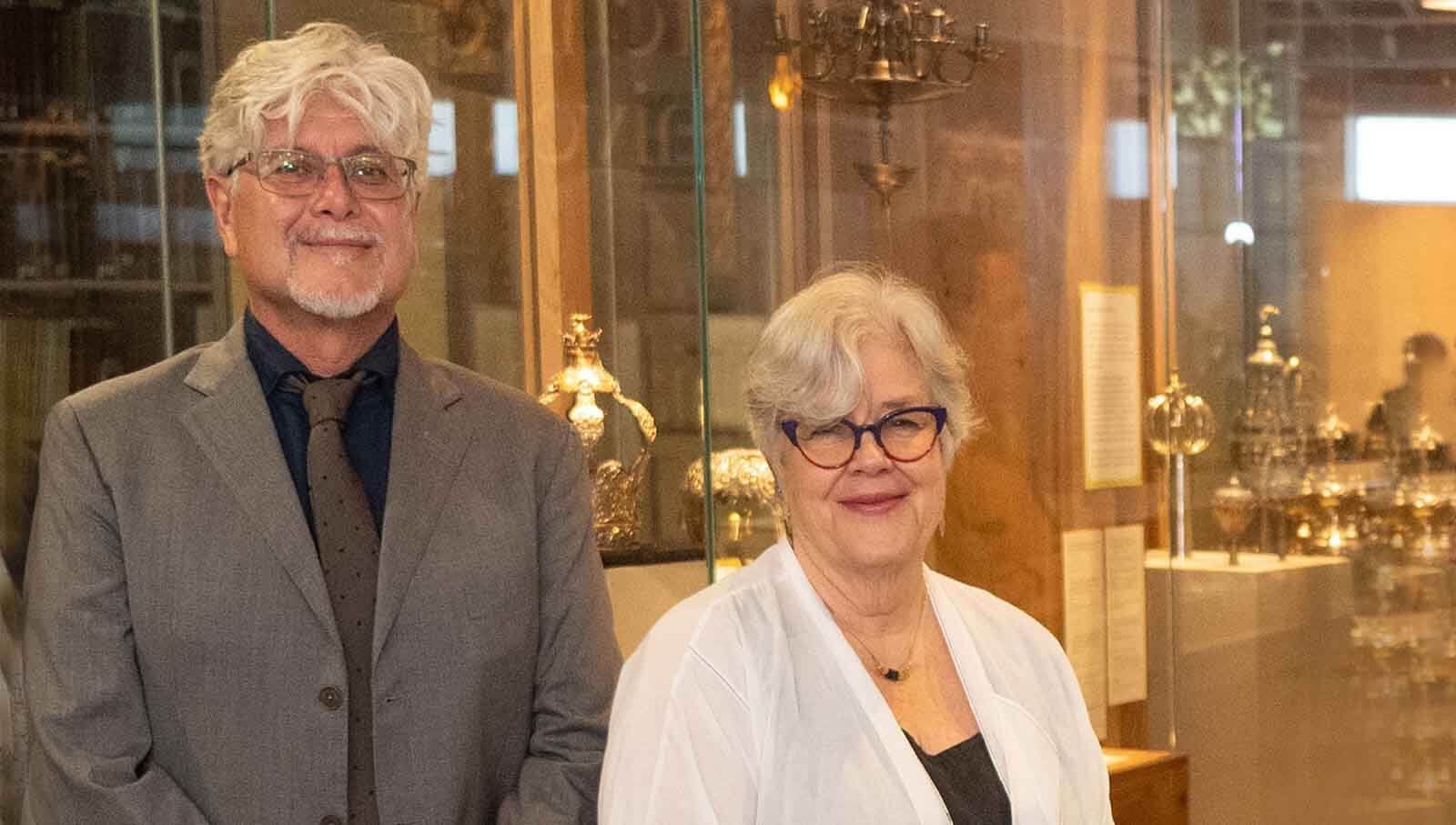
The end of the 2025 fiscal year marked a significant moment of transition for the Magnes with the retirements of Senior Curator Francesco Spagnolo and Registrar & Collections Manager Julie Franklin. We are grateful for their twenty years of close collaboration to steward one of the most dynamic and internationally recognized Jewish museum collections in the world.
Thank You
You make our work possible. Our impact in the community is a story of shared success between the Magnes and our supporters. Thank you for your partnership and your commitment to the Magnes.
Community Support
The Magnes saw meaningful growth in philanthropic support, driven by the dedicated Friends of the Magnes and Leadership Circle. We expanded our donor base by 30% from the previous year. This broadened support was matched by extraordinary generosity with total gifts received growing by approximately 50%.

Magnes Museum Foundation & Magnes Advisory Boards
Established in 2010 when the Magnes became part of UC Berkeley, the Magnes Museum Foundation promotes the well being of the museum at the university. It provides critical annual operating support from the endowment it holds on behalf of the Magnes and its dedicated board members provide invaluable guidance and leadership. The Magnes convened a new Advisory Board in the fall of 2024 focused on philanthropic growth, community building, and collections development.
Members of both boards are essential advocates who champion the Magnes’s mission and vision and ensure the museum’s continued advancement.
“The Magnes brings its terrific collection, Cal’s intellectual depth, and the broader community into conversation. With its expanding programming, I find myself there more and more. It’s truly great—and a growing resource.”
— Rena Fischer, Magnes Advisory Board Member
In Memoriam
Joan Bieder (1943–2025) | A journalism pioneer and UC Berkeley Professor Emerita, Joan Bieder was a devoted friend of the Magnes. Her scholarly legacy includes The Jews of Singapore, a definitive history tracing the roots and evolution of Singapore’s Jewish community.
Florence B. Helzel (1921–2024) | As Curator of Prints and Drawings, Florence Helzel established Magnes’s vital collection of works on paper. Through more than a dozen exhibitions and accompanying catalogs, she built a foundation of scholarship that continues to shape the museum’s exhibitions to this day.
Tad Taube (1931–2025) | Philanthropist Tad Taube played a pivotal role in the Magnes’s trajectory. From sustaining the museum in its early years to orchestrating its integration with UC Berkeley, his vision ensured the academic stewardship of one of the world’s largest Jewish collections.
May their memories be a blessing. Thank you to all who have made gifts to the Magnes in their memories.
Thank You
Our 2025 fiscal year has been filled with exciting programs and exhibitions, renewed and expanded community engagement, and insightful research and scholarship.
With your support, the Magnes will continue to shine as a place for connection, dialogue, and shared experiences.
